

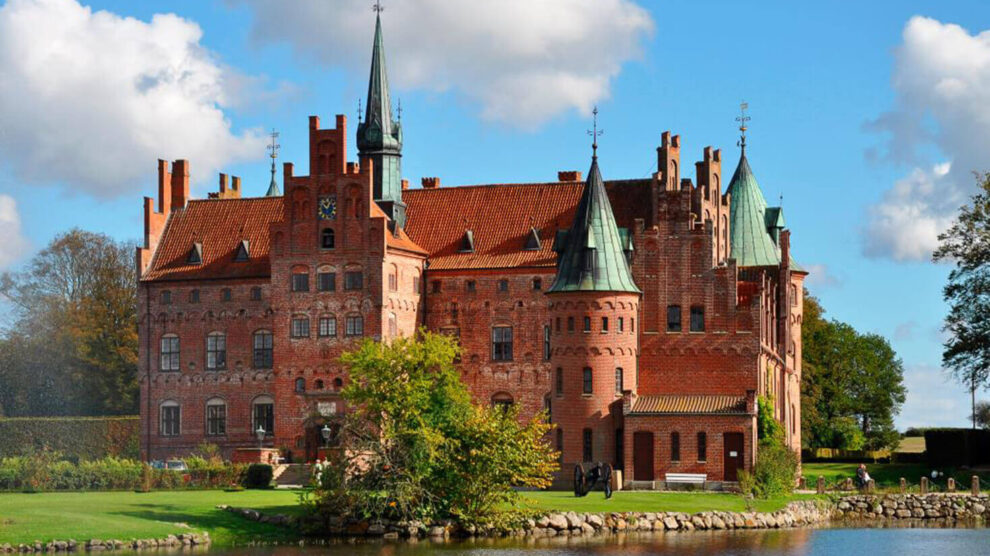

With stunning architecture, beautiful parks, and some of the best shopping malls in Denmark, Copenhagen is jam-packed destination for any tourist. Indulge in the rich history and culture of the city at the various museums, or enjoy a mouthwatering meal at one of the gourmet restaurants. Home to over 250,000 Muslims that make up 3.7 percent of the population, Denmark is slowly, but surely, embracing and catering for the Islamic faith with halal restaurants, mosques, and even cultural centers.
Copenhagen is at the forefront of Danish cities in accepting Muslim cultures with the first mosque being built in the city, and a second under construction. Escape to one of the most beautiful cities in Europe that juxtaposes historical architecture with a vibrant lively atmosphere. Perfect for a family vacation or a romantic city getaway.
History
With roots tracing back to the Vikings, The Danish Monarchy is the oldest in Europe. In the 10th Century the then King, Harald Bluetooth, converted to Christianity, rejecting many of the old Norse religious practices and winning the support of the Holy Roman Empire. Religious reformation in the 16th century saw the translation of the Bible into Danish alongside the advent of Lutheranism. The then King Frederick I’s policy of toleration had commanded that Catholics and Luthers share pulpit and church peacefully, but both groups remained dissatisfied. Luther’s teachings became increasingly popular amongst the laity, in contrast to the regency which had been taken over by the church upon the death of Frederick. This led to a period of civil war and eventually Danish officials became Lutheran, with enforced conversion or imprisonment of Catholic Bishops.
Influenced heavily by its geographical location, Danish history throughout the 16th, 17th and 18th Centuries was marred with wars of control – particularly with Sweden, Germany and Norway. In the late 18th Century, influenced by the French revolution, Denmark adopted a liberal constitutional system. These diverse influences can be seen in the amazing palaces scattered throughout the city of Copenhagen. Even though a lot of its architecture was destroyed in various wars including World War II, the city still thrives as one of the most beautiful capitals in Europe. Neutral during WWII, Denmark was occupied by Germany in April of 1940 despite having accepted a pact of non-aggression with Germany. Upon the Nazi threat of deportation, Denmark succeeded in smuggling most of its Jewish population to neigbouring Sweden by 1943. Denmark was liberated by the British in 1945. At the end of the war Denmark became a founding charter member of the UN, and though she joined the European Community in 1972, she remains a reluctant member, rejecting the adoption of the Euro in 2000.
The Islamic history of the city only dates back to the 1970s when Muslims arrived from Pakistan, Morocco, and Turkey searching for jobs. In the 1980s and 1990s the population of Muslims grew when refugees and asylum seekers from Iran, Iraq, Somalia and Bosnia arrived. As an accepting nation, Denmark gave these people refuge, and a new home. Today, Denmark has approximately 226 000 Muslims, many of them children of migrants, including around 2800 ethnic Danes who have converted to Islam.
Food
With over 200 halal restaurants scattered around the city, finding a delicious bite to eat for Muslim travellers is easy. From Kebabish that serves a delicious chicken tikka plate, to Royal Copenhagen Tea Lounge & Restaurant that serves the best sweet treats in town including scones and blueberry cheesecake, Copenhagen has some of the most delicious halal food. Most of the halal food in the city is however influenced by Turkish, Pakistani and Moroccan flavors and cuisine.
Up until about a decade ago the Muslim palate looking for local dishes would have been disappointed, as Danish cuisine was essentially associated with potatoes and bacon. Of late however, Danish gastronomy has been revolutionized with a focus on local produce and a renaissance of classic dishes. In reflection of the region, you can find clean, fresh simple dishes that bring local flavours to the fore. Try for example the cabbage salad with smoked salmon and grandmothers dressing; a light starter with a creamy tangy kick.If you’re looking for something with greater depth you can’t beat the smoked fish chowder (just be sure to ask for fish stock rather than chicken). Served with a good bread, this dish will have you wiping your plate clean. For dessert, try a rhubarb trifle – the sweetness of the macaroons against the tart rhubarb will leave your mouth watering for more.
Copenhagen Street Food
If you’re looking for lots of choice, locally grown produce and a little of the unknown, Copenhagen Street Food is the place to go. A collection of stalls offering international street food, the menu varies daily depending upon the local produce available to the stall holders. Not all stall holders are halal, so be sure to ask. If you prefer to go the vegetarian route, try Latienda, tasty vegetarian and vegan fusion cuisine based in the traditional Colombian kitchen. For dessert, try Cheesecaken, this stall offers the best cheesecakes in the original American style, but with a Scandinavian touch. If you prefer ice cream then Ishytten will make your mouth water, with organic ice creams, sorbets and danish cakes.
al-Diwan
al-Diwan seeks to provide a dining experience infused in the art, style and cuisine of the great Mughuls. For starters, begin your meal with Tandoori Lamb Tikka, marinated tandoori- grilled lamb prepared in onions, tomatoes and special Kashmiri spices. For your main meal, let the chef dazzle your tastebuds with the Chicken Jalfrezi ‘House speciality’; chicken served with ginger, green pepper and eggs. Keep it simple and cooling for dessert with a Mango kulfi.
Attractions
Tivoli Gardens
Get your adrenaline pumping at Tivoli Gardens, simply known as Tivoli. Perfect for a family day out, this famous amusement park and pleasure garden was opened on 15 August 1843. Today, it is the second oldest amusement park in the world. With roller coasters, giant swings, kiddie rides, arcades, theatre, an aquarium and beautiful gardens, there are plenty of activities for the entire family. Be sure to try out the fatamorgana – a 3 in 1 ride that has something for every member of the family; with bumper cars on the ground level for 5 year olds, animal themed gondolas the provide great views and a moderate ride for the more conservative to the wild 2.5 G-force, floorless rotational tower for the adrenaline junkies. Visitors in the theme park can also enjoy performances in the Tivolis Koncertsal (classic concert hall), and the Tivoli Boys Guard, a music ensemble of boys dressed in traditional uniform.
Christiansborg Palace
Located in central Copenhagen is Christiansborg Palace built in 1167, it is still in use today, the palace is used as a government building seating Danish Parliament, home to the Danish Prime Minister’s Office, and to the Supreme Court of Denmark. Visitors in the castle can enjoy the finest Danish architecture and learn about the country’s political history. If you buy tickets including the Royal Reception Rooms you will also enjoy a free guided tour.
Grønnegade
Located close to Strøget is the Grønnegade quarter, a charming area filled with narrow streets lined with colorful houses that have been converted into shops. The quarter boasts quaint interior design stores like Hay, and trendy fashion boutiques on Kronprinsensgade. Kronprinsensgade has become the city’s fashion centre and houses many of Denmark’s top designers clothing. A must-stop in the Grønnegade is AC Perchs Thehandel – a tea shop and room that is the oldest retailer in the area dating back to 1834. There are also restaurants like Blomsterbergs known for its yummy cakes and desserts, and Green Sushi that sells organic sushi. The quarter is also known for its organic perfumeries.
Latin Quarter
Nicknamed the Latin quarter due to the presence of the old University campus, this stretches east from Vor Frue Plads along Store Kannikestræde and Skindergade to Købmagergade, and north up Fiolstræde to Nørre Voldgade. The quaint Latin Quarter is known for its groovy record stores, comic book stores, trendy cafes, and hip clothing stores. Once one of the poorest areas in Copenhagen, it has been transformed into one of the most popular areas to go shopping in the city. With picture perfect nooks, the Gråbrødretorv (Grey Friars’ Square) and second hand bookstores don’t miss the treasures of the Latin Quarter
Strøget
From budget-friendly stores to the most expensive stores in the city, Strøget is the largest shopping area in Copenhagen. Located in the heart of the city, Strøget is one of Europe’s longest pedestrian streets that stretches 1.1 kilometres and runs from the City Hall Square (Rådhuspladsen) to Kongens Nytorv. Stores like Max Mara, Prada, Mulberry, Hermès and Louis Vuitton are all represented in the street, as well as familiar favorites like H&M, Vero Moda, Weekday and Zara.
Natural Wonders
Rosenborg Castle & Garden
If you love descendant and royal architecture then head to Rosenborg Castle. The renaissance castle was originally built as a summerhouse in 1606, and was used by the Danish regents as a royal residence till 1710. The castle grounds are also home to the Rosenborg Castle Garden, the country’s oldest royal garden spanning 12 hectares. Dominating the park are two diagonal lime tree avenues known as the Knight’s path and the Lady’s path that converge at the centre of the garden The gardens are also host to other historical buildings and monuments such as the Rosenburg Barracks. Depending on what time of year you go, you may get to enjoy art exhibitions and other events such as concerts. Today, the gardens are a popular retreat and attract millions of visitors every year.
Mosque
Grand Mosque of Copenhagen
In June 2014, the Grand Mosque of Copenhagen was opened in the Norrebro neighborhood. The mosque, officially known as Hamad Bin Khalifa Civilisation Center is the first purpose-built non-Ahmadiyya mosque in Denmark. Being one of the largest mosques in Europe, the 6700 square metre complex includes a mosque, cultural centre, television studio, and fitness centre. The mosque space itself is encased in beautifully simple walls with carvings that meet the ceiling and a central dome and chandelier that bathes the space in soft lighting. Even though the mosque is not in the best area (between a car dealer and a self-storage firm), it is the perfect place to complete your daily prayers and an excellent place to learn about the history of the Islamic faith.
Minhaj ul Quran Denmark
Based in Copenhagen, Minhaj-ul-Quran Denmark is the Danish branch of the Minhaj-ul-Quran International organization. It is the first center in Europe built by Minhaj-ul-Quran International and includes a youth league, women league and an educational Farghana institute. The building itself is a an old factory that was bought and converted into an Islamic Centre. Various conferences, talks promoting and preaching the Islamic faith is held at the center.


Add Comment