


Embark on a journey to a world where traditions coexist with technology. Somewhere in the deserts of Morocco there is a man dressed in djellaba and turban sitting on his camel attempting to get signal on his cellphone. Morocco, a souvenir of the past, is the bridge between medieval times and modern day.
This authentic and unique country is located in Northwest Africa, bordering the Mediterranean Sea and the Atlantic Ocean. Known for its scorching deserts, humongous mountains, wise camels, intricate architectures and grand mosques, Morocco is filled with panoramic sights for every traveler.
History
Originally governed by the indigenous people known as Berbers along a familial tribal system, Morocco was invaded by the Romans around 42 AC and remained under Roman rule for almost 5 Centuries. With the advent of Islam in the Arab world and the corresponding collapse of the Roman empire, repeated Arab raids into Morocco resulted in Muslim rule of the region by 705 AC, albeit divided into smaller kingdoms. Until the 19th Century, Morocco remained independent, ruled by multiple different dynasties many of whom came from diverse ethnic roots.
In the 12th and 13th centuries, under the Almoravid and Almohad dynasties, Morocco controlled much of Spain, Portugal, and North Africa. However, as the Ottoman Empire declined, Spain, France Germany and Britain took an interest in Morocco; and she fell victim to the politicking between the 4 European countries, all vying for power and control. Following internal civil unrest, a weakened Morocco was forced to become a protectorate of France with the treaty of Fez in 1912. The Sultan continued to reign, but did not actually rule. Moroccans continued to fight French rule, but declared Morocco a protectorate of France, with some areas controlled by Spain.
Moroccan uprisings against France and Spain mired the next 40 years, with the Istiqlal Party declaring full independence in 1944, a declaration approved by the Sultan. Refusal of France to accept any change in the status quo combined with the forced exile of the Sultan in 1954 sparked active civil and religious opposition. In 1955 France surrendered with the return of Morocco’s leader Muhammed V. Morocco was granted independence from France and Spain in 1956. Despite this, Spain still didn’t concede the the western desert of Sahara until strategic mass demonstrations in November of 1975 led to a fully waged war that lasted 16 years. It is now known as the Sahrawi Arab Democratic Republic, but is still the subject of dispute with Morocco. After the death of Hasan Ibn Muhammed, Morocco became a constitutional monarchy in 1977. Today Morocco has arguably the cleanest human rights record in Africa and the Middle East.
Food
The aroma of the delicious Moroccan dishes is already a tease, but the taste will put you in a whole another world. One of the mouthwatering national dishes of Morocco is couscous – granules of wheat served over meat or vegetable of your choice. Tasty Moroccan Lamb Tangine is a stew slowly cooked with a special tool called tangine that makes the meat tender. Mixed with sweet and sour ingredients, Chicken Tangine includes honey, mint and onions. Change it up a little with the spicy street salmon covered in tomato paste, chilli, salt, and cumin sizzled up for a crispy bite. Sip yummy soup known as ghoulal, a spicy broth garnished with snails; just pluch the snail from the shell with a toothpick. An incredibly healthy snack, the soup is great for fever and digestion. You sat on them while camel trekking now it’s time to relish that stuffed camel meat. Vegetarian? No worries, try Aubergine fritters – Aubergine with paprika batter fried for a crunchy taste, these can be found almost anywhere in Morocco. End your meal with the famous dessert of Morocco, briwat, deep fried pastry triangles with almonds. With all the scrumptious dishes of Morocco, savor as much food as your stomach can hold.
Al Fassia Gueliz Restaurant
Experience traditional Moroccan cuisine at one of the best restaurants in Marrakesh, Al Fassia Gueliz. Who run the world? Girls, the restaurant is run and served by women. The inexpensive menu is filled with savory meals such as lamb tagine and savory brochettes served with rice on the side. For dessert try the traditional Moroccan Pigeon Pastilla. To get a taste of traditional cuisine of Morocco, this restaurant is the perfect place to start.
Azar Restaurant
One of the lavish upscale restaurants of Morocco has to be Azar located in Marrakech. Decorated with royal red carpets and red roses, the restaurant has leather comfy couches putting the F in fine dining. Candles are placed at each table while decorative lamps hang from the ceiling. The cuisine is a mix of Moroccan and Lebanese meals. Appetizers include crunchy pawns, pastilla with chicken roasted almond, and plenty more tasty treats. The main meal consists of beef, lamb, calamari, fish and poultry. Try the beef filet with potatoes or the lamb tagine with apricots, honey and almond. If you are looking for a luxurious place to dine, Azar restaurant should be your number one choice.
Dinarjat
Classy and comfy, Dinarjat is an Arab-Andalusian style restaurant located in Rabat. The restaurant has some of the best Moroccan food using authentic ingredients. The salads are prepared with the freshest ingredients made to be delicious and light. Appetizers include skewers marinated with rice with almond and raisins. Main course meals include almond chicken and onions. Or try the lamb tagine sweetened with raisin. With all the delicious meals along with the cozy atmosphere, Dinarjat is perfect for the whole family.
Attractions
Chefchaouen
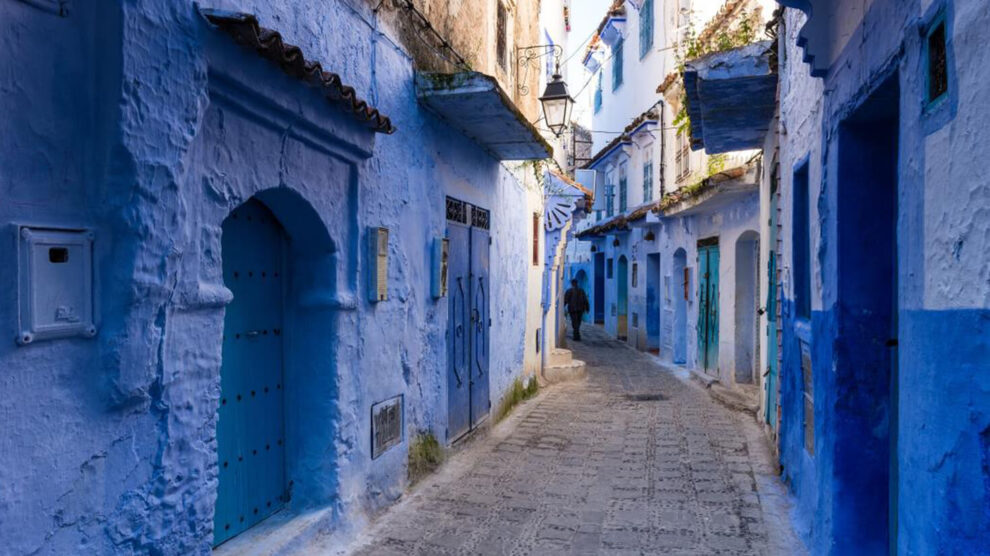
A town resembling a fairy tale setting, Chefchaouen is the place you and the kids will fall in love with. Originally built as a fortress in 1471 to combat the Portuguese, it is now a popular tourist destination. The surreal town is strategically built in the Rif Mountains. The walls of Chefchaouen are covered in blue creating an atmosphere of serenity. Shops are packed with merchandise, pick the one you want to remember Chefchaouen with. There are also several restaurants with delightful food and reasonable prices. Hiking up the Rif Mountains to find an entrance to a town with blue walls seems like a dream, except its real. When in town, stop by the Chefchaouen museum that has a panoramic view. At the top of the museum visitors can watch the villagers carry out their jobs as the tourists wonder around in amazement. Grab one of your French, Arabic or Spanish friends since the displays of the museum are only in those languages. But, that shouldn’t stop you from the once in a life time stunning view of the enchanted blue town.
Medina of Fes
No need for a time machine, the medieval city of Fes is only a plane ride away. Termed “Athens of the West”, Fes is the historical city that has been around for centuries to witness the bravest of rulers. Remarkably, the city remains car free with the main transportation being donkeys and mules. Medina of Fes el Bali is the oldest part of Fes and it is recognized as a World Heritage by UNESCO. From the narrow streets, the sounds shop owners and braying donkeys to the enticing smells of Moroccan street food, the atmosphere of Fes el Bali will give you the impression that you are in another century. Because Fes was once the capital of Morocco, the madrasas, mosques, and palaces date back to the 13th and 14th century, and are a must for the architectural inquisitor. The intricate maze formed by the stunning buildings will astonish you and may even leave you a bit confused; so be sure to grab yourself a tour guide. The unfamiliar twists and turns give you more reasons to take a donkey ride to Medina of Fes. Get a feel of medieval times with the authentic city that will charm you.
Natural Wonders
Camel Trekking/ Sahara Desert
The world looks better 6 foot off the ground! You can’t leave Morocco without riding on the original public transportation, Camels. Venture into the Sahara desert to experience a ride from the animal known as man’s best friend long before dogs became common pets. Traveling to the Sahara desert might be on your wish list, cross it off as you pack lightly for the risky trip that can take up to three days. The barren desert revolves around burning temperatures as the sun rises to teeth chattering temperatures at sundown. The bone dry Sahara desert can be reached from different parts of Morocco. Erg Chebbi is known for its grand dunes. Hours after camel trekking there will be an oasis with delicious meat and fresh water. Through your journey you will be vicariously living the life of a nomadic Arab. Surrounded by mountains of sand you will find yourself in awe by the wonders of the Sahara desert.
Atlas Mountains
Less talking and more climbing, the striking view from the Atlas mountain range will leave a lasting impression on you. The Atlas Mountains are approximately 1,600 miles across stretching from Morocco to Tunisia. Luckily, the highest peak can be reached in Toubkal, Morocco. If you felt short all your life, this is your chance to stand tall at the peak of Atlas while grinning at the world beneath you. There are plenty to explore in the Atlas Mountains like visiting the dashing mountain village of Imlil. Spend a night in one of the hotels while tasting the savory dishes from the Moroccan restaurants. Buy as much souvenirs as you like from carpets, jewelry and even fossils. Stop by the walled town of Taroudant at the south of the Atlas Mountains. More like heaven, Taroudant is surrounded by huge fields of grass and orchards. The melted snow from the mountains is the gardener of this green sight. Taking a hike up the Atlas Mountain might take a lot of energy but the view is well worth the effort.
Mosque
Hassan II Mosque
Pour your heart out to the As-Salam at the world’s fifth largest mosque in Casablanca, Morocco. The magnificent Hassan II Mosque stands 698 ft facing the Atlantic Ocean. Recognized as having the world’s largest minaret, the mosque accommodates a total of 105,000 worshippers. It was uniquely designed by the talented French architect Michel Pinseau and built by Bouygues in 1993. The isolated minaret separated from the rest of the buildings is a symbol of God’s oneness. The marvellous chandelier droops down providing a beacon of light for the women’s floor. One part of the mosque includes a sparkling glass floor that overlooks the seabed. In essence, you would be bowing down to look at the surface of the Atlantic Ocean. Alas, this is not open to visitors, only for royals. Pointing to the direction of God, lasers glow from the minaret towards Mecca during the night. If that didn’t impress you, then the architectural nod to the environment should – the mosque was built with electronic doors and heated floors in order to prevent damages from earth quakes. The architecture of the mosque is in Moorish style with horseshoe arches and carved intricate patterns. When in Morocco escape the medieval scene to witness the lavish Hassan Mosque. It just might be the highlight of your trip.


Add Comment